A well-designed outdoor property rarely depends on a single improvement. Landscaping, fencing, hardscaping, concrete, trees, and recreational features all influence how a yard looks, functions, and feels. When these elements are planned separately, homeowners may end up with awkward transitions, drainage problems, mismatched materials, or features that compete for space. A coordinated approach makes it easier to create an outdoor environment that supports everyday use.
Good planning starts by looking at the entire property rather than focusing on one isolated project. Homeowners should consider traffic patterns, privacy, grading, drainage, maintenance, sunlight, existing trees, and how different areas connect. A patio may need a pathway, a pool may require fencing, and new planting beds may need retaining features or edging. Each decision can affect the next.
By understanding how landscaping, fencing, hardscaping, and concrete work together, homeowners can make better choices about sequencing, materials, and long-term maintenance. The result is often a more cohesive property with fewer conflicts and a layout that can adapt as needs change.
Build the Overall Landscape Plan First
A complete outdoor plan begins with the broadest elements of the property. Existing slopes, mature trees, drainage patterns, structures, utility locations, and property boundaries should all be reviewed before major installation work begins. This helps homeowners identify areas that need correction and areas suitable for new features.
Local landscaping services can help homeowners plan planting zones, lawns, drainage, erosion control, and connections throughout the yard. Landscaping is not simply decorative. It also helps define movement, soften hard surfaces, improve privacy, and create visual transitions between structures.
Homeowners should decide which features are priorities and which can be added later. A family might want a patio, fence, pool, garden, and play area, but completing everything at once may not be practical. A master plan allows projects to happen in phases without requiring future work to undo earlier improvements.
The landscape plan should also account for maintenance. Plants requiring constant pruning may not suit walkways, while large trees can create problems near pavement or structures. Choosing the right plant sizes and locations can reduce future conflicts.
Drainage is another essential part of the plan. Water should move away from foundations, patios, and other areas where standing water causes damage. When grading, planting, and hard surfaces are considered together, the property is easier to manage over time with fewer avoidable problems.
Coordinate Hardscaping With the Landscape
Hardscaping provides structure within an outdoor space. Patios, retaining walls, paths, steps, edging, and outdoor gathering areas create defined zones for daily activities. These elements form the framework for plants, lawns, and decorative features.
Hardscaping contractors can help homeowners plan materials, elevation changes, drainage, and transitions between different surfaces. A patio should connect naturally to doors and walkways, while retaining walls should fit the slope and function of the property. Poorly placed features can make a yard feel disconnected or harder to maintain.
Material selection also affects the overall design. Homeowners may visit masonry supply stores to compare pavers, stone, block, caps, edging, and other products before finalizing a project. Seeing materials in person can make it easier to understand texture, scale, and how options work together.
Color and pattern should complement the house as well as other exterior features. Too many competing materials can make the yard look fragmented, while a limited palette creates consistency. This does not mean every surface has to match exactly. Coordinated tones and textures can provide variety without making the design feel chaotic.
Landscaping can then be used to soften the hardscape. Low plants, ornamental grasses, shrubs, and groundcovers can frame patios and paths while integrating permanent surfaces into the yard. The most successful designs balance structure with natural elements without allowing either to overpower the other.
Use Concrete to Support Key Outdoor Features
Concrete is a versatile material in an outdoor improvement plan. It can be used for patios, walkways, driveways, steps, pads, footings, and structural support. Because concrete is often installed early in a project, its placement should be coordinated carefully with fencing, landscaping, and other future work.
Local concrete services can help homeowners evaluate where concrete is appropriate and how thickness, reinforcement, grading, and finish may affect performance. A walkway, for example, needs different considerations than a driveway or equipment pad. Planning the intended use from the beginning helps ensure the finished surface can handle the expected load.
Concrete also influences drainage. Slabs and walkways should be installed with appropriate slope so water does not collect against the home or flow into unwanted areas. Nearby landscape beds may need to be adjusted to keep soil and mulch from washing onto paved surfaces.
Homeowners should plan access before concrete is poured. A new patio may need space for future stairs, railings, outdoor kitchens, or pergola posts. Leaving these decisions until later can make additional work more complicated.
Concrete can also coordinate visually with hardscaping. Decorative finishes, borders, or nearby pavers can create a more customized appearance. Even basic concrete can feel integrated when its shape and placement align with the rest of the landscape. Treating concrete as part of the design rather than a separate utility surface helps create a more polished result.
Plan Fencing Around Function and Access
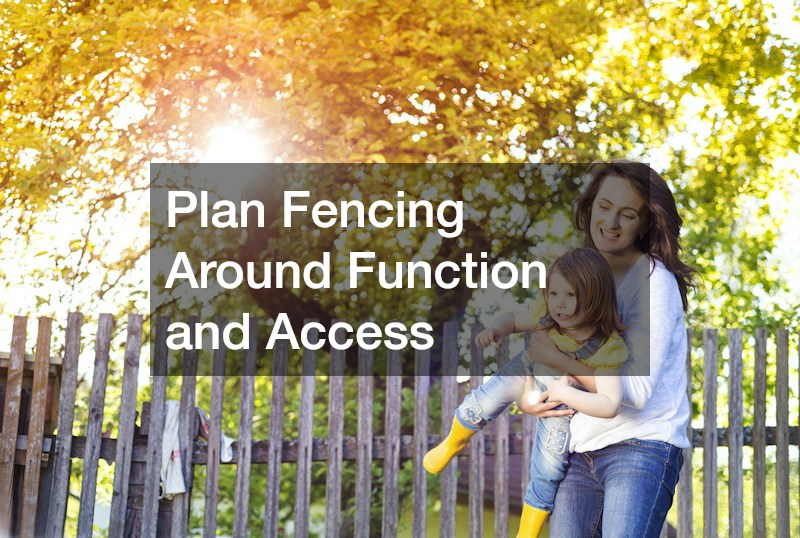
Fencing affects privacy, security, visibility, and movement through the property. It can define boundaries, protect certain areas, and help organize the yard into functional zones. Because fences create permanent lines within the landscape, their location should be planned in relation to patios, gardens, pools, driveways, and walking routes.
Fence installations should begin with a clear understanding of property lines, gate locations, and how the fence will interact with nearby features. A gate placed too far from a walkway may create an inconvenient route, while a fence built before grading or hardscaping is finished may need adjustments later.
Traditional installation methods are not the only option. No dig fencing services can be useful for certain projects because they avoid some of the excavation associated with standard post installation. The right method depends on soil conditions, fence type, layout, and local requirements.
Existing fences also need ongoing attention. Fence repairs may include replacing damaged boards, tightening hardware, correcting leaning posts, or repairing gates that no longer close properly. Addressing these problems early can help prevent larger sections from deteriorating.
Fencing should also complement surrounding materials. A simple fence may contrast with detailed stonework, while a decorative fence can add interest to a minimal landscape. Homeowners should consider both appearance and maintenance so the fence continues to work with the rest of the property over time.
Integrate Pools Into the Entire Yard
A pool changes the way an outdoor space functions, so it should never be treated as an isolated feature. Placement affects walkways, fencing, landscaping, drainage, seating, shade, and the amount of open yard space that remains. Planning these elements together can create a more comfortable and practical pool area.
Local pool builders can help homeowners understand how pool dimensions, access points, equipment placement, decking, and surrounding features fit within the property. Before construction begins, homeowners should think about how people will move from the house to the pool and where furniture, storage, or shade structures may be located.
Fencing is especially important around pools because local rules may establish specific requirements for barriers, gates, and access. Those requirements should be considered during the early design phase rather than after the pool has already been installed.
The surrounding hardscape should provide enough room for safe movement without overwhelming the yard. Concrete, pavers, or other surfaces can create circulation areas, while landscaping can soften the edges and add privacy. Plant choices near the pool should also consider leaf drop, roots, and maintenance.
Drainage is another priority. Water from rain, splashing, or cleaning should have a clear path away from structures and landscape beds. A coordinated pool plan considers the entire surrounding environment so the space remains functional instead of becoming a collection of disconnected features.
Manage Trees Before Major Construction
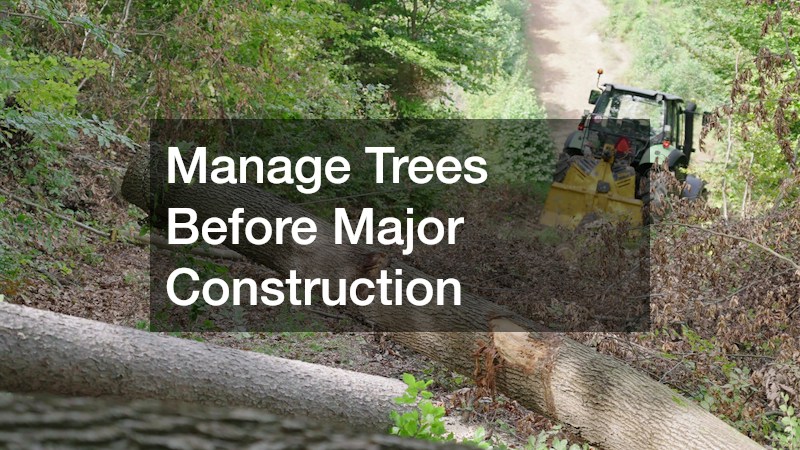
Trees can add shade, privacy, and character to a property, but they can also affect construction plans. Large roots may conflict with patios, concrete, retaining walls, fences, or pool excavation. Overhanging branches can interfere with structures and create cleanup issues in heavily used outdoor areas.
A tree removal service may be necessary when a tree is dead, unstable, poorly located, or directly conflicts with a planned improvement. Removing a problematic tree before construction begins can reduce the risk of damaging newly installed surfaces or structures later.
Not every tree near a project needs to be removed. A tree trimming service may be able to improve clearance around roofs, fences, pathways, or new gathering spaces while preserving the tree. Selective trimming can also help manage low branches that interfere with visibility or circulation.
Homeowners should avoid making tree decisions based only on appearance. Root systems, species, health, mature size, and distance from proposed construction all matter. In some cases, preserving an established tree may influence where a patio, walkway, or fence should be located.
Tree work should generally happen before major hardscaping or concrete installation when possible. Heavy equipment and falling branches can damage finished surfaces, and later access may be limited by new structures. Coordinating tree care early helps protect both the landscaping and the investment in other improvements.
Connect Each Area With Clear Transitions
The most cohesive outdoor spaces use transitions to connect different materials and activities. A walkway can lead from the driveway to a gate, continue toward a patio, and then transition into a pool or garden area. These connections help the yard feel intentional and make movement more comfortable.
Changes in elevation should be handled carefully. Steps, retaining features, and sloped paths can make a property easier to navigate when they are placed where people naturally walk. Landscaping can help highlight these transitions and keep edges from feeling abrupt.
Material changes should also make sense. Pavers might border a concrete patio, or stone edging might separate a lawn from a planting bed. Repeating certain textures or colors in multiple areas can visually tie the property together even when different materials are used.
Lighting can strengthen these connections after dark. Fixtures near steps, walkways, gates, and gathering areas can make routes easier to follow and help define separate zones. Lighting should be planned with landscaping so growing plants do not block fixtures over time.
Homeowners should also consider practical transitions for maintenance equipment. Gates, paths, and storage areas should be wide enough for lawn equipment, wheelbarrows, or other tools that need to move through the property. A beautiful yard is easier to enjoy when its layout also supports routine care.
Sequence Projects for Better Long-Term Results
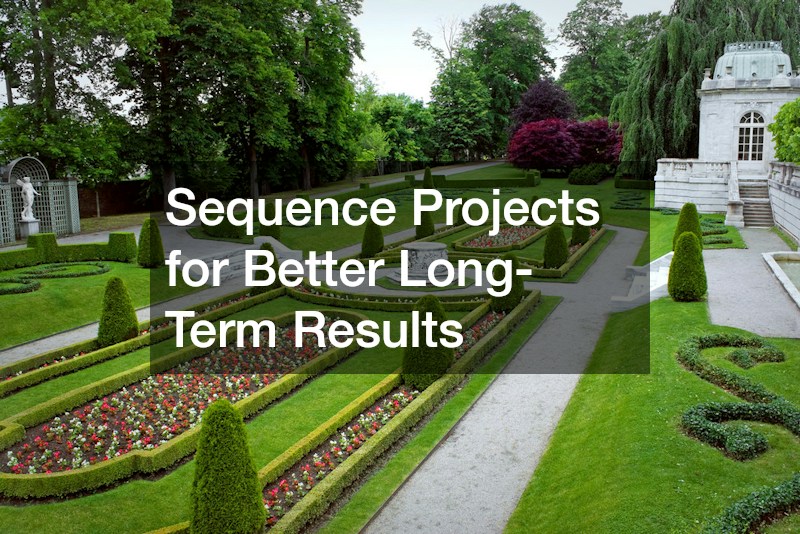
The order in which outdoor projects are completed can have a major effect on cost, efficiency, and finished quality. Heavy excavation, grading, tree work, and concrete installation generally make more sense before delicate landscaping or final fence details. Planning the sequence reduces the chance that completed work will be damaged by later construction.
Homeowners should begin with site preparation and any major drainage corrections. Tree work can follow, especially when equipment access is still open. Concrete, hardscaping, pools, and structural features can then be installed before final planting, turf, and decorative details.
Fencing may happen at different stages depending on the project. Posts or boundary planning may need to be addressed early, while final panels and gates may be easier to install after nearby surfaces are complete. Coordinating contractors can help prevent scheduling conflicts.
A phased plan is often more practical than trying to complete every improvement at once. Homeowners can prioritize structural and functional projects first, then add landscaping and decorative elements as budget allows. This approach makes it possible to improve the property without losing sight of the overall design.
When landscaping, fencing, hardscaping, concrete, tree care, and recreational features are planned as parts of one system, the property can function more smoothly. Thoughtful coordination helps improve drainage, movement, privacy, maintenance, and visual consistency while allowing each feature to support the others. Over time, that integrated approach can make the outdoor space easier to maintain, more enjoyable to use, and better prepared for future improvements.